
Key takeaways
- Major clinical guidelines, including from the American College of Physicians, list yoga among non-drug options to consider for chronic low back pain.
- Studies have found yoga can produce improvements comparable to physical therapy for some people with chronic low back pain.
- It works best when practices are tailored to the individual and built up gradually.
- Yoga complements medical evaluation; it does not replace assessment of the underlying cause of pain.
Chronic low back pain is one of the most common reasons adults seek care, and it is also one of the areas where yoga has been studied most seriously. This article looks at one widely discussed piece of research — a year-long trial comparing yoga with physical therapy in a diverse urban population — and then steps back to explain what yoga therapy for back pain typically involves and who it may suit.
The study at a glance
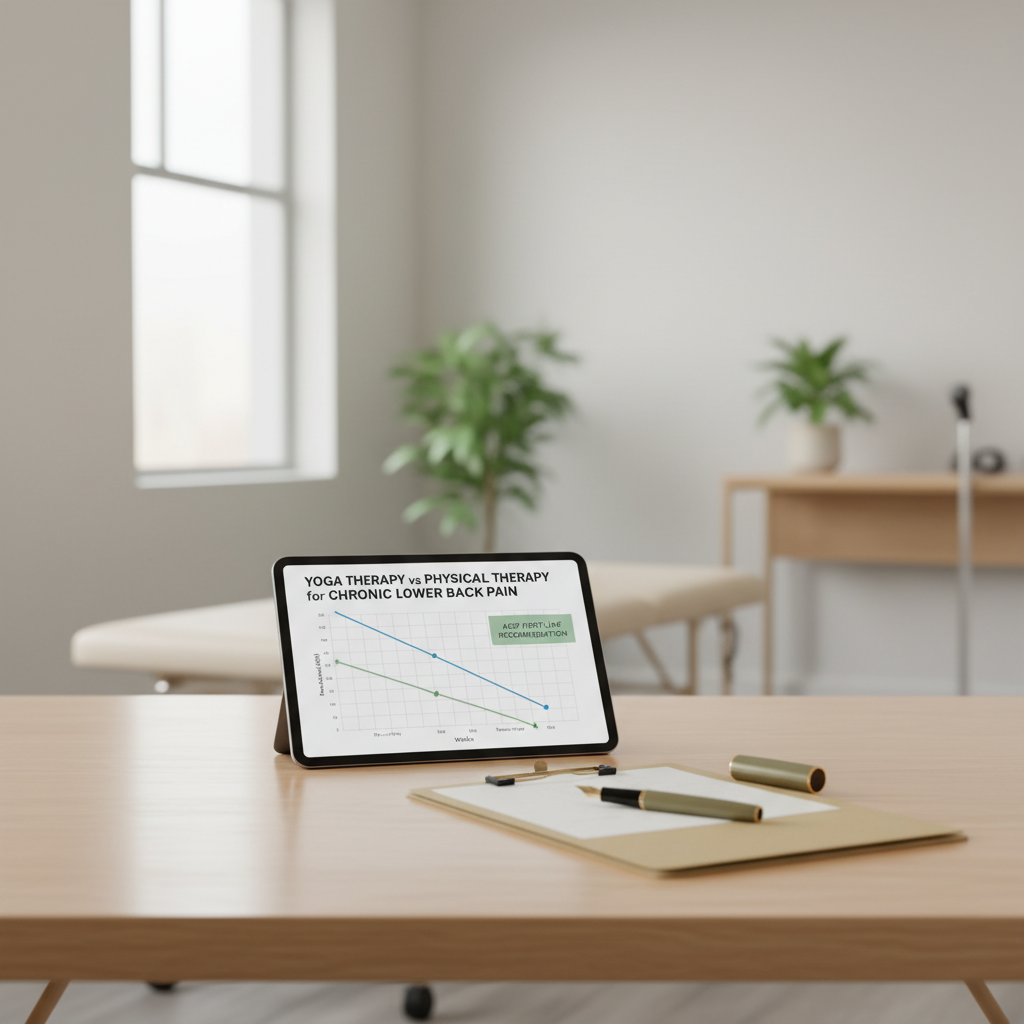
In a significant development for chronic pain management, a study published in the Annals of Internal Medicine brought to light that yoga can be as beneficial as physical therapy in treating chronic low-back pain. The research, a collaborative effort led by Boston University and involving institutions such as the University of Pittsburgh and the RAND Corporation, spanned a year. It aimed to assess whether the therapeutic effects of yoga on chronic low-back pain are consistent across various demographics, including racial or ethnic minorities and those facing healthcare disparities. This holds particular importance for diverse urban populations, often grappling with low socioeconomic status and limited access to healthcare. A summary of the study is available from the National Center for Complementary and Integrative Health (NCCIH).
How the research was designed
The research involved 320 adults, aged between 18 and 64, all suffering from chronic low-back pain without a specific underlying cause. The participants, predominantly from low-income, racially diverse backgrounds, were randomly divided into three groups:
- Yoga group: participants attended a structured 75-minute yoga session once a week, complemented by exercises to practice at home.
- Physical therapy group: this group received up to 15 personalized physical therapy sessions, each lasting an hour, along with prescribed home exercises.
- Education group: members were provided with a comprehensive self-care handbook for back pain management, plus newsletters summarizing key points and periodic check-in calls.
What the study found
Both the yoga and physical therapy groups showed similar levels of improvement in pain intensity and disability related to back pain. These improvements were notably more substantial than those observed in the education group. A significant observation at the 12-week mark was the reduced reliance on pain medication among participants in the yoga and physical therapy groups. The positive outcomes for these groups were sustained over the entire 52-week period and appeared to correlate with the frequency of class or session attendance.
The authors noted that yoga could serve as a viable alternative or complement to physical therapy, particularly in urban settings where access to diverse healthcare options may be limited, with further research planned into cost-effectiveness, work productivity, and effects on mental health.
What yoga therapy for chronic back pain typically involves
Outside a research setting, working with a yoga therapist on back pain looks different from joining a general group session. A course of care usually begins with an assessment — your pain history, what your physician has found, what movements aggravate or ease symptoms, and what your daily life demands. From there, the yoga therapist builds an individualized, gradually progressing program combining gentle movement, breath work, pacing strategies, and a short home practice, adjusted over time based on how you respond. Clinical guidelines such as those from the American College of Physicians include yoga among recommended non-drug options for chronic low back pain, which is one reason many physicians are comfortable seeing it used alongside conventional care.
One thing yoga therapy does not do is replace medical evaluation. New, severe, or worsening back pain — or pain accompanied by symptoms such as numbness, weakness, or fever — should always be assessed by a clinician first.
Who it suits, and where to go next
Yoga therapy tends to suit people whose back pain is persistent but has been medically evaluated, who prefer an active role in their own care, and who can commit to regular practice — in the study above, benefits tracked with attendance. For a broader introduction, see our overview of yoga for back pain and our practical guide to yoga for lower back pain. For a deeper look at the research landscape, read our review of the clinical evidence on yoga therapy for chronic low back pain. And when you are ready to work with someone directly, you can find a certified yoga therapist near you.