
Key takeaways
- Gentle, well-supported yoga is something many people use during and after pregnancy to ease common discomforts and stay connected to the body through big physical changes.
- Safety comes first: practices should be modified for each trimester and again for the postpartum recovery period.
- Always get clearance from your obstetrician or midwife before starting or continuing yoga during pregnancy, and treat yoga as a complement to — never a replacement for — prenatal and postpartum medical care.
- A certified yoga therapist with prenatal training can tailor a practice to your stage, your history, and your health needs.
Pregnancy and the months after birth bring some of the largest physical and emotional changes a body ever goes through. Many people turn to gentle yoga during this time — not to perform demanding postures, but to move comfortably, breathe well, and stay grounded. Approached carefully and with professional guidance, a thoughtful practice can be a supportive companion through pregnancy and recovery. This guide covers why gentle movement appeals to so many expectant parents, how a practice typically changes trimester by trimester, what working with a prenatal-trained yoga therapist actually looks like, and — most importantly — how to keep safety at the center of every decision.
Why gentle yoga appeals during pregnancy
As the body changes, common complaints include lower-back discomfort, tight hips, swelling, disrupted sleep, and rising stress. Gentle, supported movement and slow breathing are tools many expectant parents find soothing for these everyday strains. Just as importantly, the breath-focused, present-moment quality of yoga can offer a calm pause in what is often a busy and anxious season.
None of this requires athleticism or prior experience. The practices that tend to feel most helpful during pregnancy are usually the slowest and most supported ones. The goal is comfort, steadiness, and body awareness — not progress toward advanced postures.
Adapting the practice by trimester
A safe prenatal practice changes as pregnancy progresses. Broadly, prenatal-trained teachers and yoga therapists emphasize stability over intensity, avoid deep twists and lying flat on the back later in pregnancy, skip poses that compress the belly, and use props generously for support.
- Early pregnancy: many people continue a familiar gentle practice, with extra attention to fatigue and nausea and much less emphasis on effort or achievement.
- Mid pregnancy: balance shifts as the center of gravity changes, so supported standing work, wider stances, and props near a wall or chair become more important.
- Late pregnancy: the focus usually narrows to breath, comfortable supported positions, pelvic mobility, and rest.
Because every pregnancy is different, these are general principles rather than a fixed routine — the right modifications depend on your stage, your history, and your provider's guidance.
What working with a prenatal-trained yoga therapist looks like
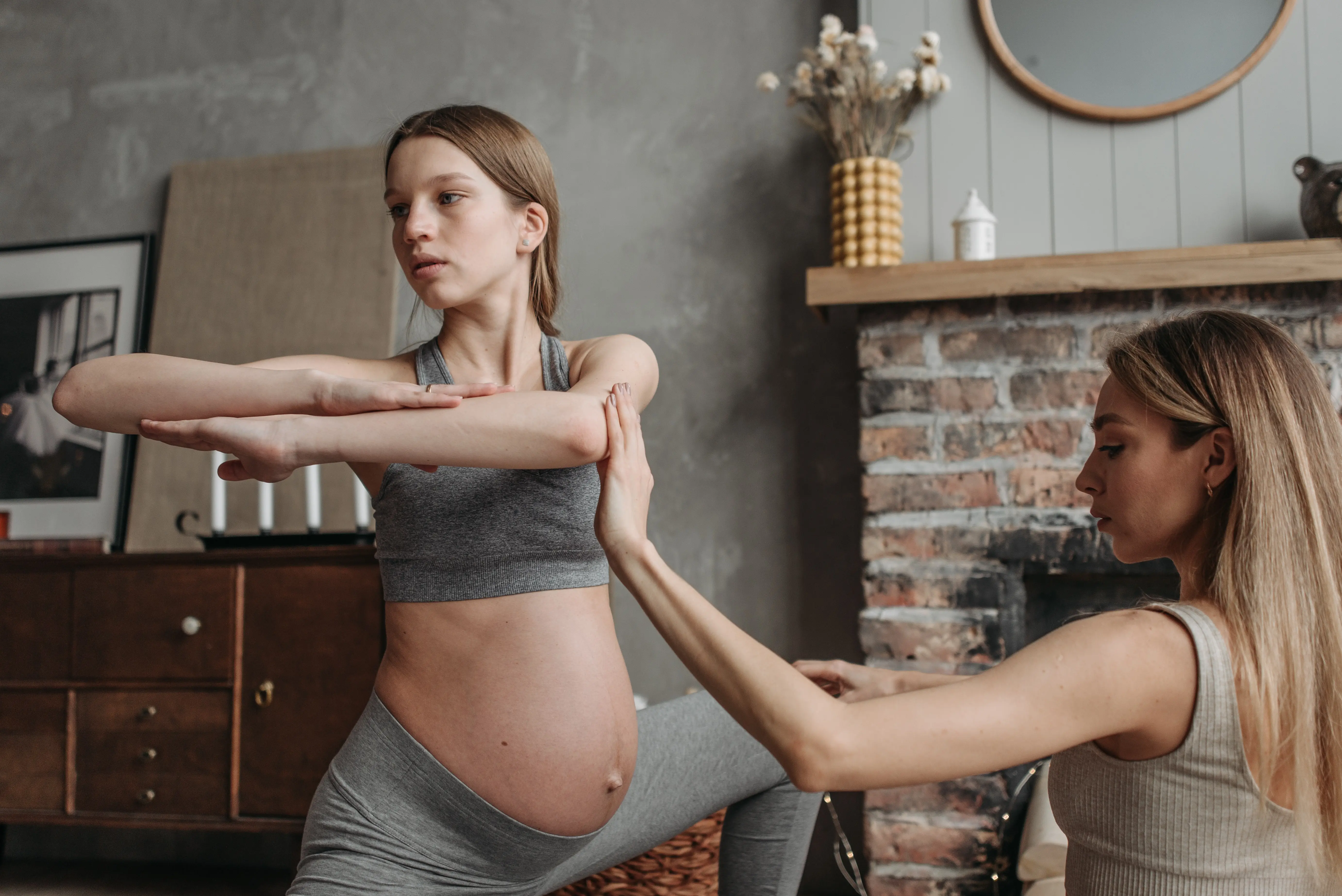
A certified yoga therapist with prenatal experience typically begins with a conversation, not a posture: how the pregnancy is going, what your obstetrician or midwife has advised, what feels uncomfortable, and what you hope to get from the practice. From there, sessions are individualized — a supported position that eases lower-back strain for one person may be adapted or skipped entirely for another. This one-to-one attention is the main difference between yoga therapy and a general group setting, and it matters most when the body is changing week by week. If you would like to understand this individualized approach in more depth, see our overview of private yoga therapy.
The postpartum period
After birth, recovery is gradual and individual. Early movement is usually very gentle, with a focus on breath, the pelvic floor, and rebuilding core support over time rather than rushing back to a previous practice. Returning too quickly can do more harm than good, so postpartum yoga is best resumed only after your provider has confirmed it is appropriate for you. Many new parents also find that short, realistic sessions — a few quiet minutes of breathing while the baby naps — are far more sustainable in this season than long formal practices, and that is a perfectly good place to start. A yoga therapist can help you rebuild gradually and adjust the plan as your recovery progresses.
Safety first — work with your medical team
This is essential: yoga during and after pregnancy should complement, never replace, your prenatal and postpartum medical care. Get clearance from your obstetric provider before starting, tell your yoga therapist about any complications or restrictions, stop and seek advice if anything feels wrong, and let your medical team's guidance override anything you read online — including this article. To find qualified support, you can find a certified yoga therapist near you or contact our team for help locating prenatal-trained practitioners in your area.