
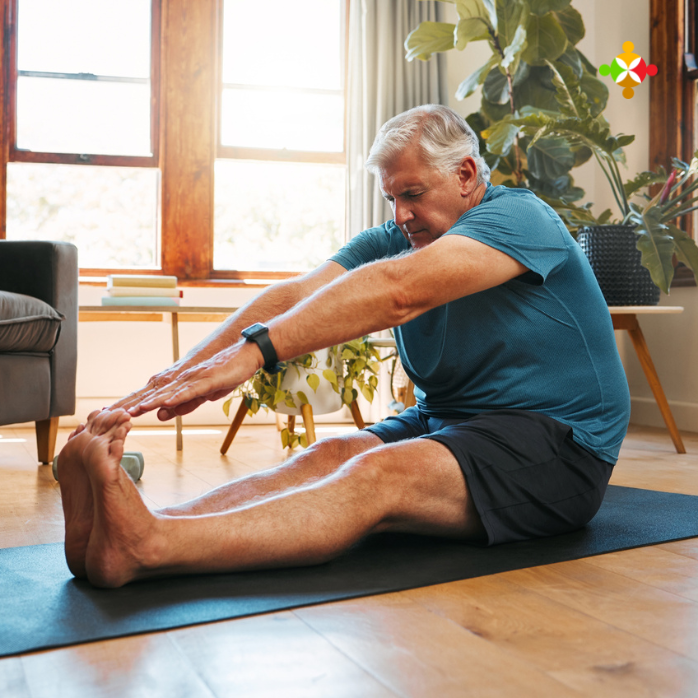
Key takeaways
- Rheumatoid arthritis is an autoimmune condition that affects joints and energy, so a helpful movement practice has to be gentle and adaptable.
- Yoga therapy can support range of motion, ease morning stiffness, and offer tools for managing stress and fatigue.
- The practice should always flex around flares, scaling down or shifting to breath and rest when joints are inflamed.
- Yoga therapy works best as a complement to, not a replacement for, your rheumatology care team.
Living with rheumatoid arthritis means navigating joints that can feel stiff, swollen, and unpredictable, along with the deep fatigue the condition often brings. Movement can feel like a risk. Done thoughtfully, though, gentle yoga therapy can help many people stay mobile, feel more at ease in their bodies, and build steadier energy, all while respecting the realities of a fluctuating condition.
What makes rheumatoid arthritis different
Rheumatoid arthritis is an autoimmune condition, which means the immune system mistakenly targets the lining of the joints, often symmetrically and frequently in the hands, wrists, and feet. Beyond joint pain and swelling, it commonly brings stiffness, especially in the morning, and a whole-body fatigue that can be just as limiting as the joint symptoms. This is why a one-size-fits-all fitness routine rarely fits. Any movement practice needs to be joint-friendly, low-impact, and easy to scale on harder days.
How yoga therapy can help
Yoga therapy approaches the body as a whole system rather than a set of sore joints. For people with rheumatoid arthritis, it can offer support in several connected ways:
- Range of motion. Gentle, controlled movement through comfortable ranges helps keep joints mobile and may ease the sense of stiffness.
- Morning stiffness. Slow, warming movement and breath early in the day can help some people loosen up and move more freely.
- Stress and fatigue. Breath-centered and restorative practices help downshift the nervous system, which may support better rest and a calmer relationship with the condition.
- Body awareness. Learning to read your body's signals helps you know when to move and when to rest.
Because pain is woven through the experience of rheumatoid arthritis, many of these tools overlap with broader strategies in our guide to yoga for pain management, and the individualized, whole-person philosophy is explained further in our overview of the benefits of yoga therapy.
Adapting the practice for flares
Rheumatoid arthritis comes in waves. During a flare, joints may be inflamed, tender, and warm, and this is not the time to push for range or strength. A skilled yoga therapist plans for this directly. On flare days, the practice might shift almost entirely to breathing, gentle supported rest, and minimal movement, returning to more active work only as symptoms settle. The guiding rule is steady and simple: never push into sharp or worsening joint pain. Mild sensation that eases is usually fine. Pain that intensifies or lingers is a sign to back off and modify.
Practical adaptations often include using props for support, avoiding weight-bearing on tender hands or wrists, favoring larger joints over inflamed small ones, and keeping sessions shorter when energy is low. The aim is to keep some form of practice possible even on difficult days, rather than an all-or-nothing approach.
Working with your care team
Yoga therapy is a complement to medical care, never a substitute for it. Rheumatoid arthritis is typically managed with medication and ongoing monitoring by a rheumatologist, and those treatments matter. The most reliable path is to work with a qualified C-IAYT yoga therapist alongside your medical team, sharing your diagnosis, current symptoms, and any joints or movements to avoid. A good therapist will welcome that coordination and adjust your practice as your condition and treatment change over time.
Getting started
If you are curious whether yoga therapy could fit into your life with rheumatoid arthritis, start slowly and choose someone trained to work with chronic conditions. Bring your questions and your limits to the first session. Expect a practice that meets you where you are and changes with you. When you are ready, you can find a yoga therapist near you who understands how to adapt for inflammatory arthritis.
This article is for general education and is not medical advice. Always consult your rheumatologist or healthcare provider before starting a new movement practice, and seek care promptly for new, severe, or worsening symptoms.